You can have a great product and still lose the sale on a phone. A slow page, a fiddly checkout, or one too many taps is often enough to send someone elsewhere.
That’s where a branded shopping app can help. Not because every store needs one, but because the right app puts what your customers need in one place: products, payments, useful content, and support.
People find products through social videos, search, and creators. And they rarely search in perfect sentences. Someone might type running shoes wide fit, coffee beans low acid, or pouches nicotine and expect to find what they need. A good app should make that easy, no matter how people phrase their searches.
The catch? Nobody keeps an app just to see another catalog. Give people something worth opening, even when they’re not ready to shop.
How to level up your customer’s buying experience
Shopify, BigCommerce, and WooCommerce do a solid job of powering online stores. Your app should build on that, not duplicate your website.
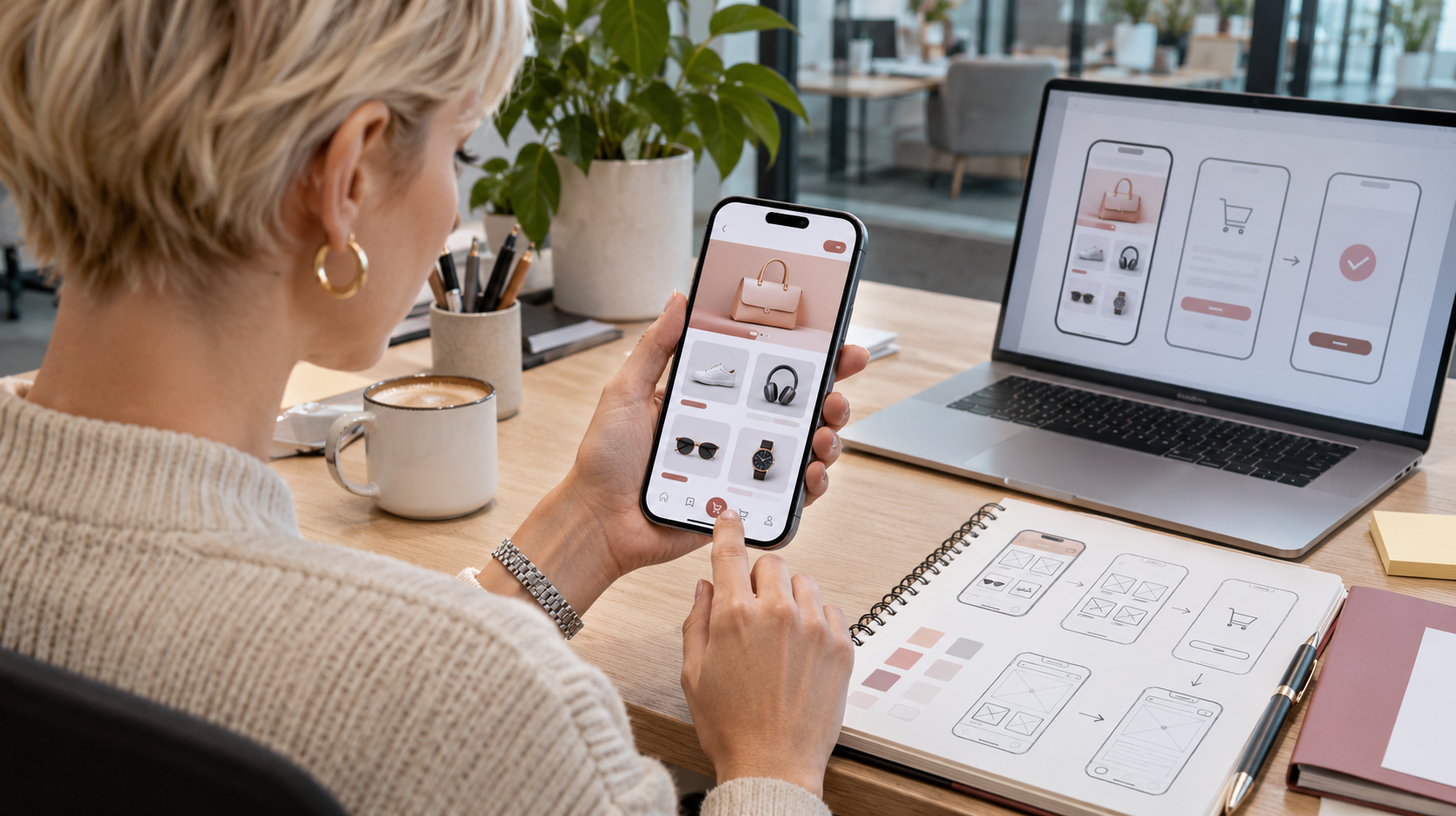
Start with the basics. Make browsing fast. Use clear photos, honest descriptions, useful filters, and real-time stock updates. Show delivery costs and return terms before checkout. Let customers pay with a mobile wallet, and don’t force them to create an account just to place an order.
Now think beyond the sale.
Say you sell yoga mats and workout clothes. Someone might visit your app to buy a mat, but what will bring them back next week?
Could they book a class with a local instructor? Watch a short video on improving their form? Find a nearby event and reserve a spot? Maybe they’d like a simple guide to choosing the right mat for their practice.
You don’t need all of that at once. One genuinely helpful feature beats ten that nobody uses.
Turn useful features into repeat sales
Think of the app as a space around your products. A fitness brand can offer training plans. A skincare company can share simple routines. A coffee shop can make reordering a favorite blend effortless.

Keep the content close to what you sell. A how-to video can answer product questions. A class booking can lead to equipment sales. A member-only offer can reward regulars without turning every screen into an ad.
Let customers have a say. Reviews, polls, and community chats show you what people want next. Just make sure someone keeps the conversation useful.
Personalization helps too. Remember sizes or favorites when customers choose to share them. Make better suggestions without making people feel watched.
Bring shoppers back without being annoying
Push notifications give your app a direct way to reach customers, but permission matters. Ask people to opt in, explain what they’ll get, and send messages that are actually helpful.
A back-in-stock alert for an item on someone’s wish list? Great. A delivery update? Even better. Another vague “Don’t miss out!” notification? Probably not.
Offer clear notification settings, and don’t overload anyone’s lock screen. The goal isn’t to get the most taps today. It’s to make people happy to hear from you again.
Connect your app with email, social channels, and your online store. A customer who spots a product in a social post should be able to land on that exact item, not hunt through the home screen. Keep their cart and loyalty rewards in sync where possible.
Make the app earn its place on their phone
A custom app can become a strong sales channel, but building one isn’t the first step for every business. If most people buy from you once, a fast mobile website may be the smarter investment.
If you’ve got repeat customers and a clear reason for them to open an app, you have options. You could build from scratch, use an app builder that connects to your existing store, or work with a done-for-you team. Compare the costs, integrations, ongoing updates, and support before you commit.
Once it’s live, look past download counts. Are people coming back? Are they completing purchases? Are they saving time or getting better service?
Because selling through an app isn’t really about adding another place to buy. It’s about making the whole experience easy enough — and useful enough — those customers want to return.